Iran accelerates joint oil, gas fields development in 2 years
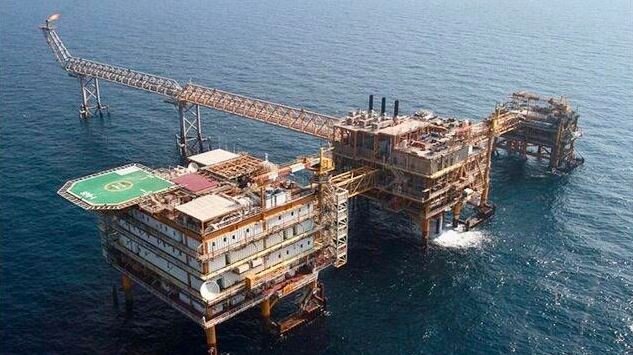
TEHRAN- According to IRNA, Iran holds approximately 158 billion barrels of proven crude oil reserves—ranking third or fourth in the world—and over 32 trillion cubic meters of natural gas reserves, placing it second globally after Russia, making it one of the world's primary energy hubs. This hydrocarbon wealth is largely concentrated in the Zagros sedimentary basin in the southern and southwestern onshore areas and the Persian Gulf basin.
The beating heart of the country's gas production is the giant South Pars field (shared with Qatar), which supplies over 70% of Iran's consumed gas. The development of its various phases, up to Phase 11, has been completed, and various pressure boosting projects are now vigorously ongoing.
In addition to South Pars, independent fields such as Kangan, Nar, Tabnak, Aghar, and Dalan, as well as newer fields like Kish and Farzad (A and B), now complement the country's gas supply chain, although onshore, promising news of new gas field discoveries continues to emerge each year.
The bulk of Iran's crude oil production comes from the fractured limestone reservoirs of the Zagros in the southwest, particularly in Khuzestan Province—through major and mature fields such as Ahvaz-Asmari (Iran's largest oil field), Marun, Gachsaran, Aghajari, and Rag Sefid, which, despite decades of extraction, still bear the main burden of production but require Enhanced Oil Recovery (EOR/IOR) methods and continuous gas or water injection.
In West Karun, development focus in recent decades has been on fields in the West Karun area, including the Azadegan oil field in its southern and northern sections—considered the world's largest joint oil field—as well as the Yadavaran, Yaran, and Darkhoveyn fields, which hold the bulk of the country's potential for increasing heavy and semi-heavy oil production.
In the Persian Gulf, key fields such as Soroush and Nowruz, Doroud, Abuzar, Bahregansar, and Sivand-Esfand are active. The most challenging segment involves border-sharing joint fields—including the Arash gas field (Al-Durra) on the shared border with Kuwait and Saudi Arabia, the Hengam oil field with Oman, and the Forouzan and Esfandiar fields with Saudi Arabia—whose exploitation and legal boundary delimitation consistently require active energy diplomacy and the adoption of advanced drilling technologies.
In this context, Petropars, as the engineering and execution arm (general contractor/E&P) for mega-scale upstream projects, has played a vital and historic role in the design, financing, and development of key phases of the shared South Pars field—including Phases 1, 4 and 5, 6 to 8, Phase 12 (as the largest phase), and ultimately the border Phase 11.
During the period when international companies like Total and Eni withdrew, Petropars managed to keep the country's gas and condensate production chain operational by leading domestic consortia and managing offshore and onshore megaprojects. Currently, it is also responsible for developing parts of the Farzad B gas field, supplementary phases of the South Azadegan oil field, and participation in the strategic South Pars pressure boosting projects.
Phase 11 gas production doubled
Over the 24 months of the 14th administration, the Petropars Group, focusing on developing joint hydrocarbon fields, managed to more than double gas production from South Pars Phase 11, bring the country's largest oil processing unit (CTEP) with a capacity of 320,000 barrels per day into full operation, and move the strategic South Pars pressure boosting project into the execution phase.
A review of the Petropars Group's two-year track record shows that the company, by simultaneously pursuing two strategies—accelerated development of border fields and implementation of maintenance projects to sustain future production—has achieved a tangible record of increasing the country's oil and gas capacity.
At the most border-bound point of the South Pars joint field, gas production from Phase 11 rose from about 12 million cubic meters per day at the start of the 14th administration to over 26 million cubic meters per day by June 2026 (Khordad 1405), following drilling and well completion, with the number of drilled wells in this phase increasing from 4 to 11.
With the connection of the 11th well—4,300 meters deep—to the nationwide pipeline, production from Platform 11B surpassed 915 million standard cubic feet per day.
Simultaneously, the jacket for location 11A, with 700 meters of pile driving on the seabed, was installed and stabilized, and the construction progress of its deck reached the 50% mark.
In the oil sector, at the shared South Azadegan field, over 17 months, with 5,806 meters of new and remedial drilling and acidizing operations on 22 wells, more than 63,000 barrels were added to daily oil production capacity.
With the introduction of 38 domestically manufactured downhole pumps after a two-year hiatus, the number of commissioned wells in the central package of this field increased to 49, and its production capacity rose to over 84,200 barrels per day.
Furthermore, with the full commissioning of all four trains of the South Azadegan Central Oil Processing Plant (CTEP), the nominal capacity of the largest processing facility in the history of Iran's oil industry reached 320,000 barrels per day—a facility that has so far processed over 28 million barrels of oil and forms the main infrastructure for West Karun development.
On the other hand, to counter the natural decline of the reservoir and sustain the country's gas production, the national mega-project for pressure boosting at South Pars entered the execution phase. In this regard, basic engineering studies for Hub 1 were completed, preparations began for installing 9 compressors onshore for Phase 12, and the contract for constructing the 2,500-ton jacket for the offshore RP-1 platform was issued.
In the Balal and Farzad B fields, execution records were also set: at Balal, following the installation of the 1,760-ton jacket and completion of the first well, the construction progress of the 500-million-cubic-foot deck rose from 4% to over 75%. At the joint Farzad B field, a 60-meter jacket weighing 1,485 tons, along with a temporary drilling platform, was completed and ready for offshore installation operations.
During this period, Petropars doubled its active offshore rig capacity (increasing from 2 to 4 rigs), launched the field phase of intelligent pipeline pigging using advanced MFL and TFI tools, and simultaneously, through the integration and coding of 26,000 item types in warehouses, completed the comprehensive reorganization of its supply chain and contracts.
EF/MA
Leave a Comment